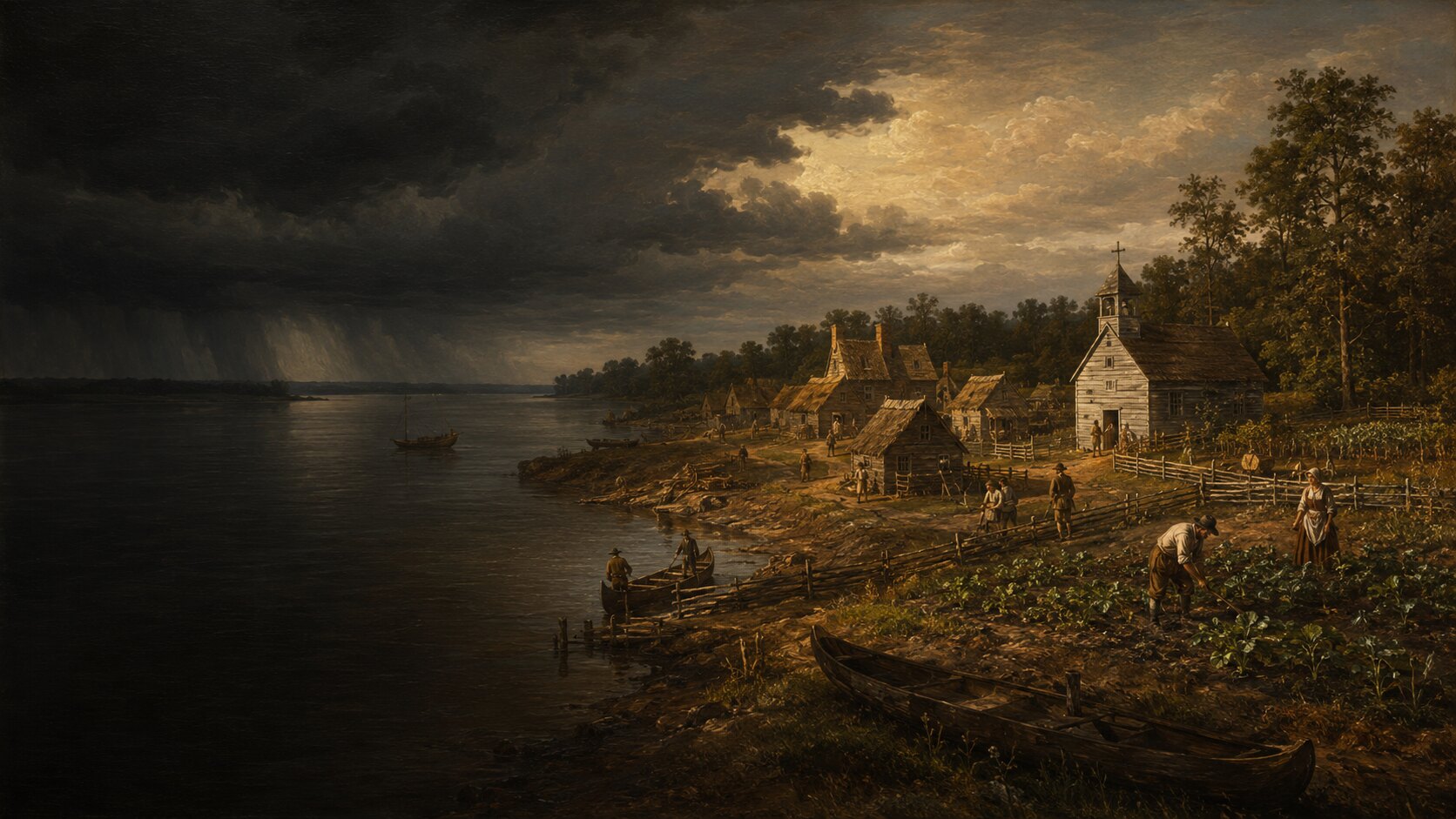
For a time, it worked. That may be the most surprising part of the story.
Along the quiet shores of the Potomac, something rare had taken shape: a colony where Catholics and Protestants lived side by side, where the Mass was offered openly, and where the old reflexes of suspicion, so deeply ingrained in Europe, seemed, if only briefly, to loosen their grip.
It wasn’t perfect.
But it was real.
Smoke rose from cooking fires beneath the trees. Fields pressed farther into the forest. Canoes moved silently along the creeks. Ships arrived with supplies, news, and new settlers. Children were born who would grow up knowing Maryland not as an experiment, but simply as home.
And at the center of it all, the celebration of the Mass continued.
For Father Andrew White, the Jesuit missionary who had helped plant the Church there, the mission had become the quiet axis of daily life. He moved among scattered farms and Native villages, learning languages, explaining the faith, carrying into the woods the same Gospel that had once been forced into hiding in England.
The colony was still small. Still vulnerable. Still unfinished.
But it was alive.
And that is often how fragile things appear just before history catches up with them.
Because the forces that had driven Catholics to seek refuge across the Atlantic had not vanished. They had only been delayed by distance. The old suspicions, the old loyalties, the old habit of turning theological differences into political threats, none of that had remained in England. It crossed the ocean too.
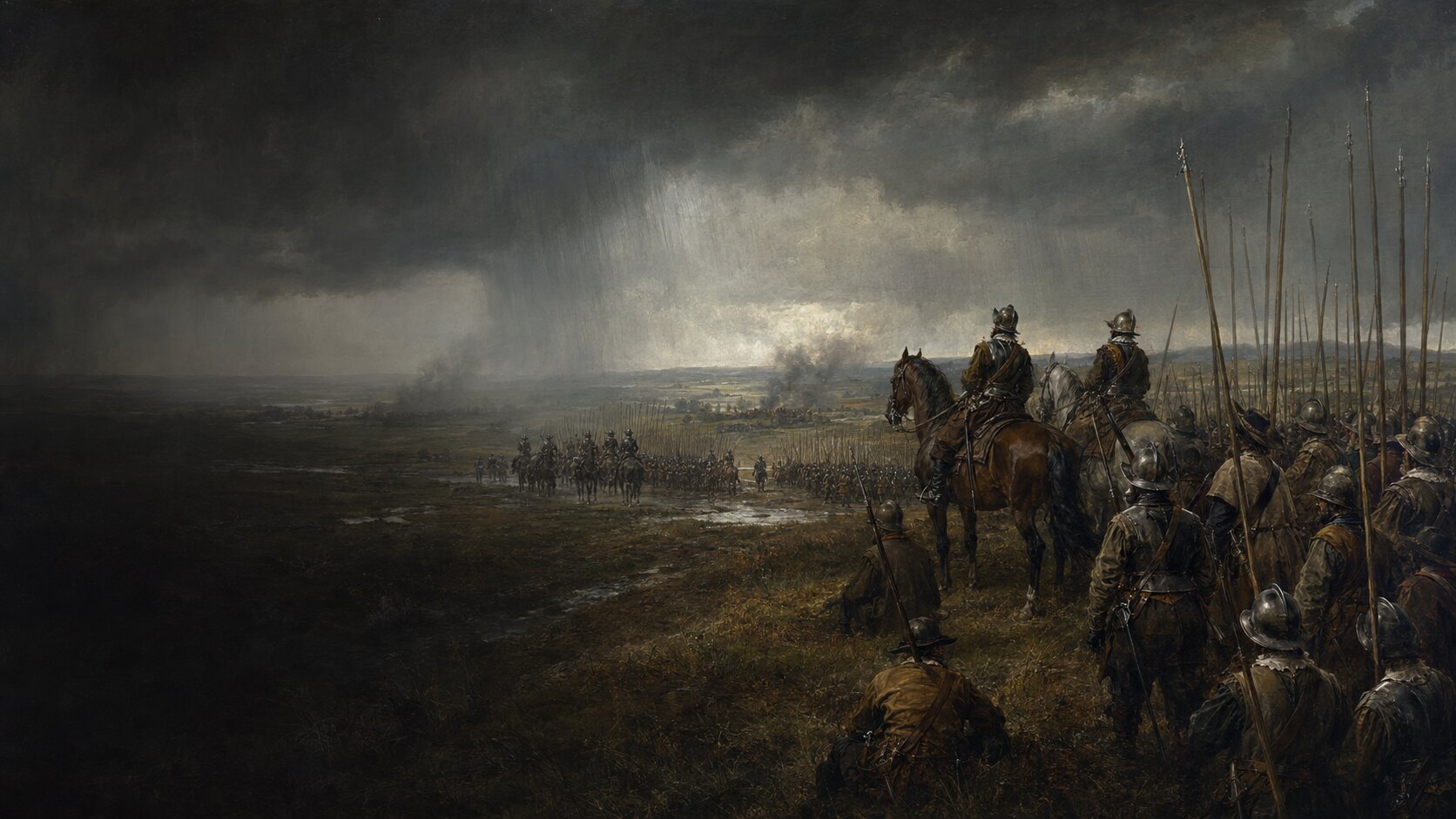
By the early 1640s, England itself was beginning to tear apart.
The long tensions between Crown and Parliament erupted into civil war. What had simmered for years now broke open into open conflict, and as so often happens, religious identity hardened inside political struggle. Catholic and Protestant distinctions became more than matters of conscience. They became battle lines.
The thunder of that conflict was heard even in Maryland.
The colony had been conceived in part as a refuge for Catholics, but most of its settlers were Protestant. For a time the balance had held under the careful leadership of the Calvert family. But a balance is not the same thing as peace. It is something more delicate than that, something maintained, watched, adjusted, and often misunderstood by the people living inside it.
Now the strain began to show.
Suspicion thickened.
Political loyalties were questioned.
The old reflexes returned.
Who belonged? Who could be trusted? Whose faith concealed a threat? Whose public loyalty masked a private allegiance elsewhere?
These were old English questions.
Now they were Maryland questions too.
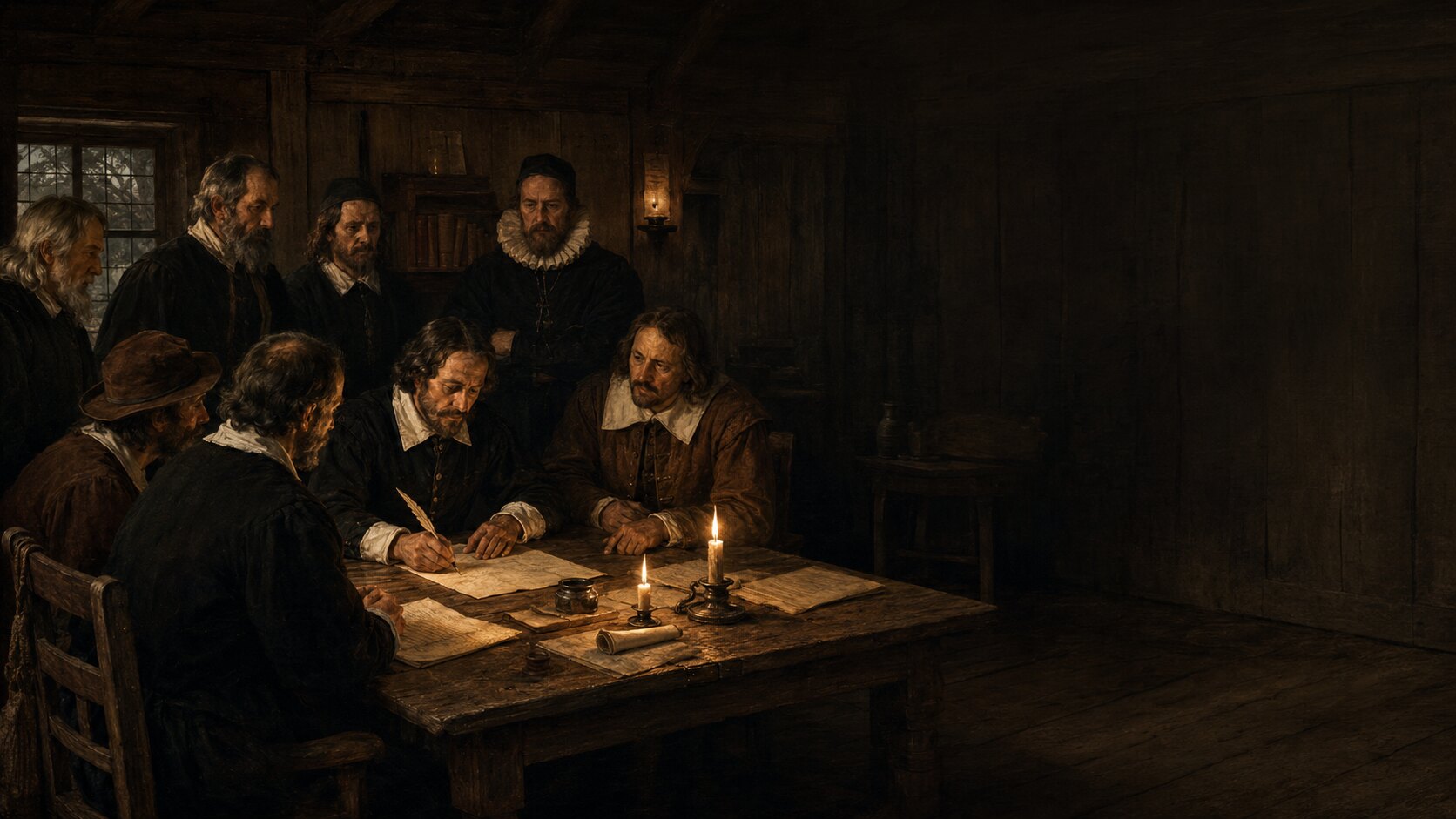
In 1649, an attempt was made to preserve what could still be preserved. The colony passed what would become known as the Maryland Toleration Act, a remarkable law for its time. It sought to protect Christians of different denominations from persecution and declared that those who professed belief in the Trinity could not be harassed for their religious practice.
It was not modern religious liberty. Not yet. It did not imagine freedom in the broad, sweeping sense Americans would later come to cherish. But in the seventeenth century, in a world still scarred by confessional violence and mutual fear, it was extraordinary all the same.
A boundary had been drawn against persecution.
A line, however fragile, had been placed in the soil.
And that matters.
Because history often moves forward not first through perfection, but through partial victories that create room for larger truths to emerge.
Still, laws alone cannot quiet fear…or prejudice.
They can restrain it for a time. Name it. Expose it. Punish its worst expressions. But they cannot, by themselves, convert the human heart. And Maryland, for all its hope, remained inhabited by human hearts: ambitious, anxious, tribal, wounded, proud.
As the conflict in England deepened, the atmosphere in the colony darkened with it. Protestant settlers increasingly resisted the authority of the Catholic proprietors. The experiment, never simple to begin with, now found itself trapped inside a storm it had no power to control.
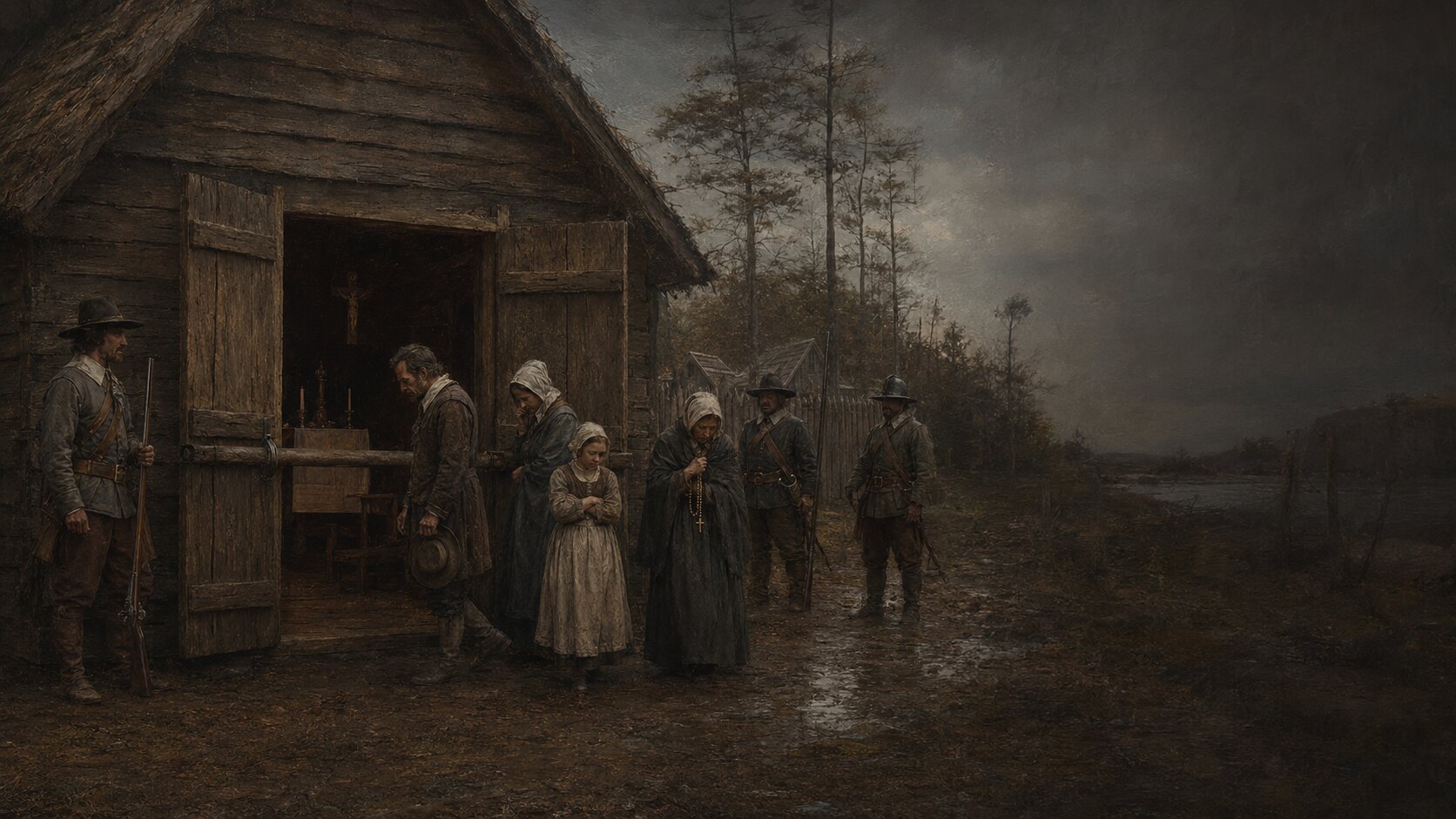
By the early 1650s, the fragile balance gave way.
Puritan forces seized control of the colony.
Catholic leaders were pushed from power. Churches were closed. The Mass that had once risen freely beneath the Maryland sky was driven again toward silence.
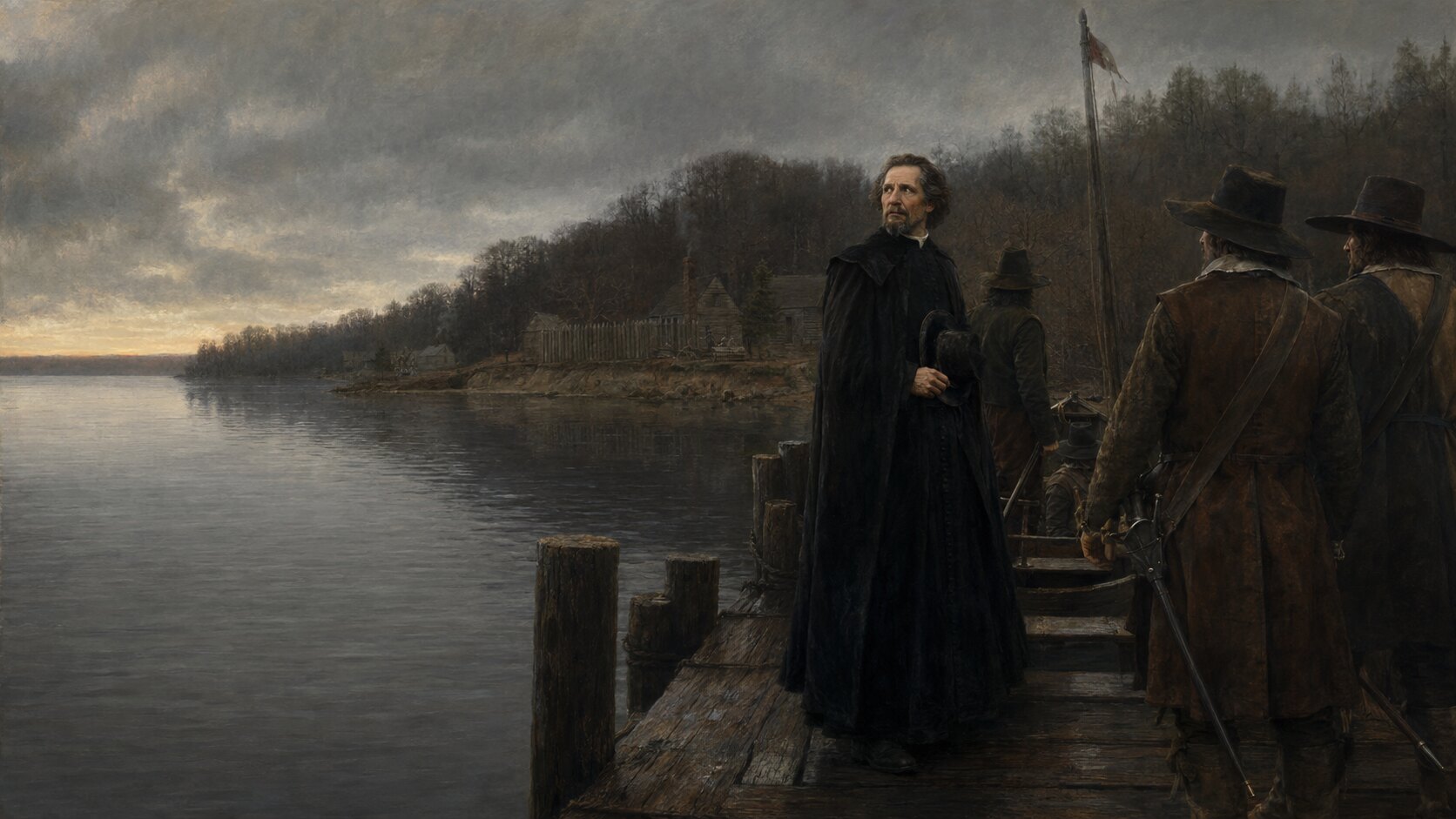
For Father Andrew White, the collapse was not theoretical.
It was personal.
The missionary who had stood on St. Clement’s Island and lifted the Eucharist toward heaven in open air now watched the small Catholic world he had helped build begin to unravel under pressure from the same old forces that had haunted England. Before long he himself would be arrested and sent back across the Atlantic, forced to leave behind the land where the dream of religious freedom had briefly taken root.
There is something especially painful about that kind of reversal.
Not simple failure.
Not the clean ending of a dream that never had a chance.
Something worse.
A glimpse of what might have been, and then the slow closing of the door.
That is what makes Maryland’s story feel so human to me.
If it had triumphed immediately, cleanly, and without contradiction, it would be less believable.
Less useful, even.
But it did not triumph that way.
It flickered.
It advanced, then recoiled.
It opened space, then lost it.
It revealed a possibility, and then showed how difficult that possibility would be to hold.
That is closer to the way Grace often works in history.
Not as a straight line.
Not as inevitability.
But as something planted, threatened, bruised, and yet somehow not destroyed.
The more I sit with Maryland’s beginnings, the less I see the colony as a failed experiment and the more I see it as a wounded one.
That distinction is critical.
A failed experiment disappears.
A wounded one leaves a scar.
And scars, if you know how to read them, tell a story not only of pain but of survival.
The dream that landed on St. Clement’s Island was never strong enough to save itself by force. It was too small, too exposed, too entangled in a world still addicted to old fears. But the fact that it was wounded does not mean it wouldn’t survive.
Something meaningful had taken place there.
Something threatening to the old order.
Something worth pushing back against.
The dream had not been imaginary.
It had been dangerous.
And that may be why it endured.
Because once a people have seen, even briefly, that another way of living together is possible, it becomes harder to forget.
Even if the memory is buried.
Even if the institutions collapse.
Even if the generation that first carried the hope forward is scattered by exile, war, and disappointment.
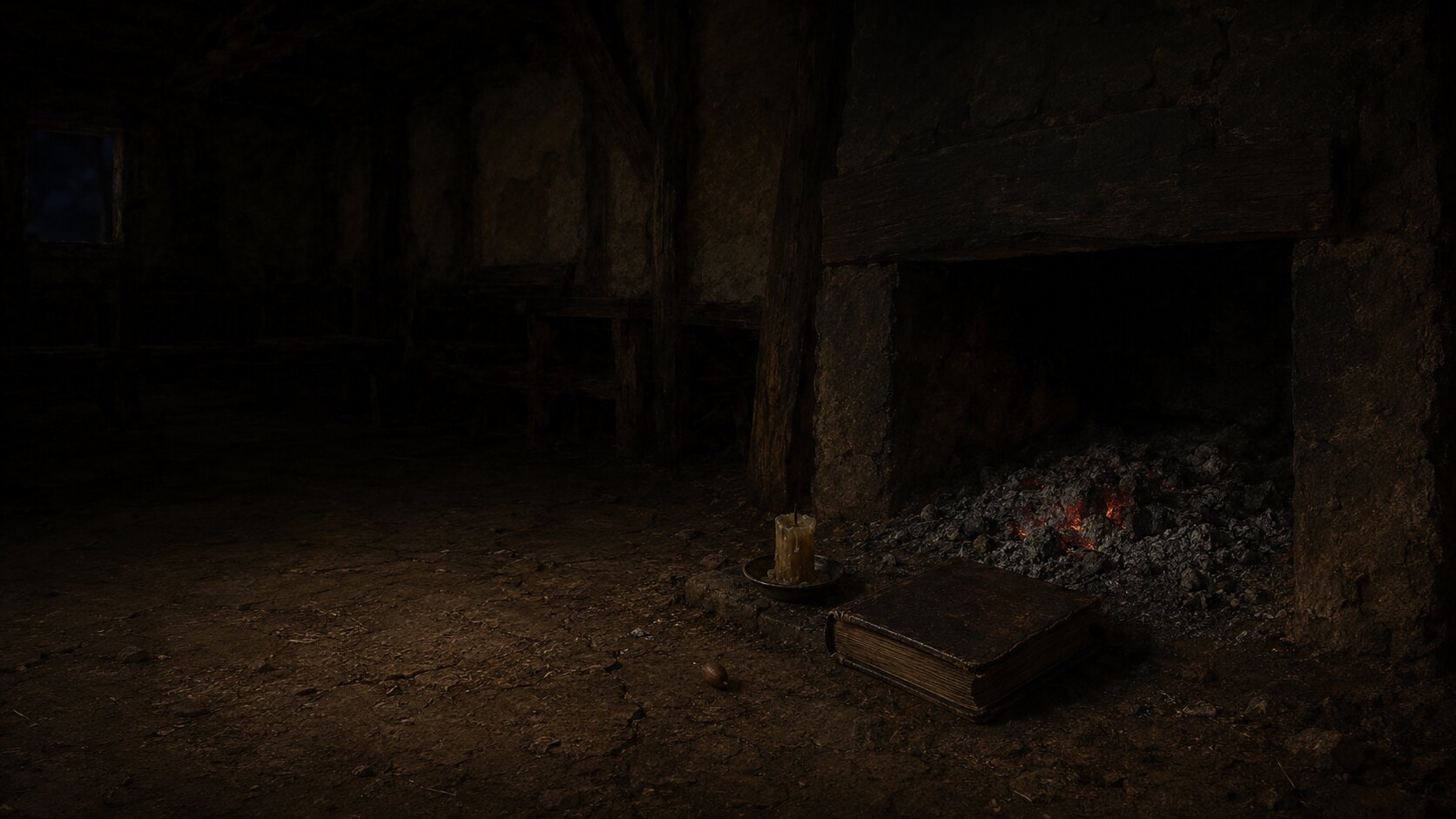
The idea remains.
Like embers under ash.
Like a prayer remembered after the chapel is closed.
Like a seed driven into the ground just before winter.
When I think back to my own crossing to St. Clement’s Island, I remember the violence of the water in the channel and the strange calm that waited for me behind the island in its lee. The whole passage changed in a matter of seconds. One moment, panic. The next, stillness.
History can feel like that too.
A brief calm.
Then another wave.
The dream that came ashore in Maryland had reached land, but it had not reached safety. The old storms were still out there. In time they would break over the colony with enough force to silence bells, scatter priests, and expose how fragile the whole experiment really was.
And yet…
the story doesn’t end there.
Because some ideas, once planted, are harder to kill than the people who first carried them.