What happens when a dream fails? Or appears to? Next we step into the long aftermath of Maryland’s early experiment… when the promise of religious freedom seemed to collapse. Still beneath the surface of that apparent failure, something was taking root.
From the fragile beginnings along the Potomac to the clear declaration of the First Amendment, this chapter traces how a wounded experiment helped shape a nation’s understanding of freedom.
Not by succeeding perfectly—but by existing at all.
Dreams have a strange way of surviving.
Even when the structures built to protect them collapse. Even when the men who first carried them are scattered by war, exile, or disappointment. Even when the prayers once spoken freely are driven underground again.
Maryland’s early experiment did not survive untouched. Churches closed. Catholic leaders were pushed aside. The Mass that had risen openly beneath the tall trees was driven back toward silence. To those living through it, the whole venture must have looked finished—the old world simply following them across the Atlantic and reasserting itself with familiar force.
And in one sense, it had.
The colony did not escape history.
It was overtaken by it.
But there is a difference between something being broken and something being erased.
Because what had taken place along the Potomac, however briefly, was not nothing. A real experiment had been made there. A people divided by fear and confessional loyalties had attempted, however imperfectly, to occupy the same civic space without immediately destroying one another. It had not lasted cleanly. It had not matured into stability. But it had existed.
And once something has existed in history, it becomes part of history’s imagination.
That’s one of the things I keep coming back to in this story.
Not the triumph of Maryland.
Its memory.
The memory of a place at which faith had breathed, if only briefly, in the open air.
The memory of a society where law had at least attempted to place some restraint on persecution.
The memory of a world that, for one moment, did not entirely obey the old logic of Europe.
That kind of memory has power.
Not always visible power. Not the kind that marches under flags or issues decrees. Sometimes it works more quietly than that. It lingers. It unsettles. It remains available to later generations as proof that another arrangement of things is possible.
The American colonies that followed were not born into religious harmony. Hardly. Suspicion remained everywhere. Established churches still held power. Dissenters were still fined, harassed, or driven out depending on where they lived. The New World had carried many of the old reflexes with it.
But the continent was changing people too.
Distance possessed a means of loosening ancient controls. New settlements sprang up far from the old centers of authority. Different Christian communities found themselves living not in isolation, but in uneasy proximity. In those conditions, coercion became harder to maintain. Coexistence, however reluctant at first, became more practical than persecution.
Ideas that at one time seemed dangerous began to feel necessary.
And in that slow change, Maryland matters more than it is often given credit for.
Not because it solved the problem.
It didn’t.
Not because it created modern religious liberty.
It didn’t do that either.
But because it helped imagine a social possibility before that possibility had the language or legal structure to fully defend itself.
That matters.
Because long before principles are written into constitutions, they usually live first as intuitions, experiments, habits, and wounds. They are tried in partial form. They fail. They are remembered. They return. Human beings learn, often slowly and painfully, that certain truths cannot be kept suppressed forever without cost.
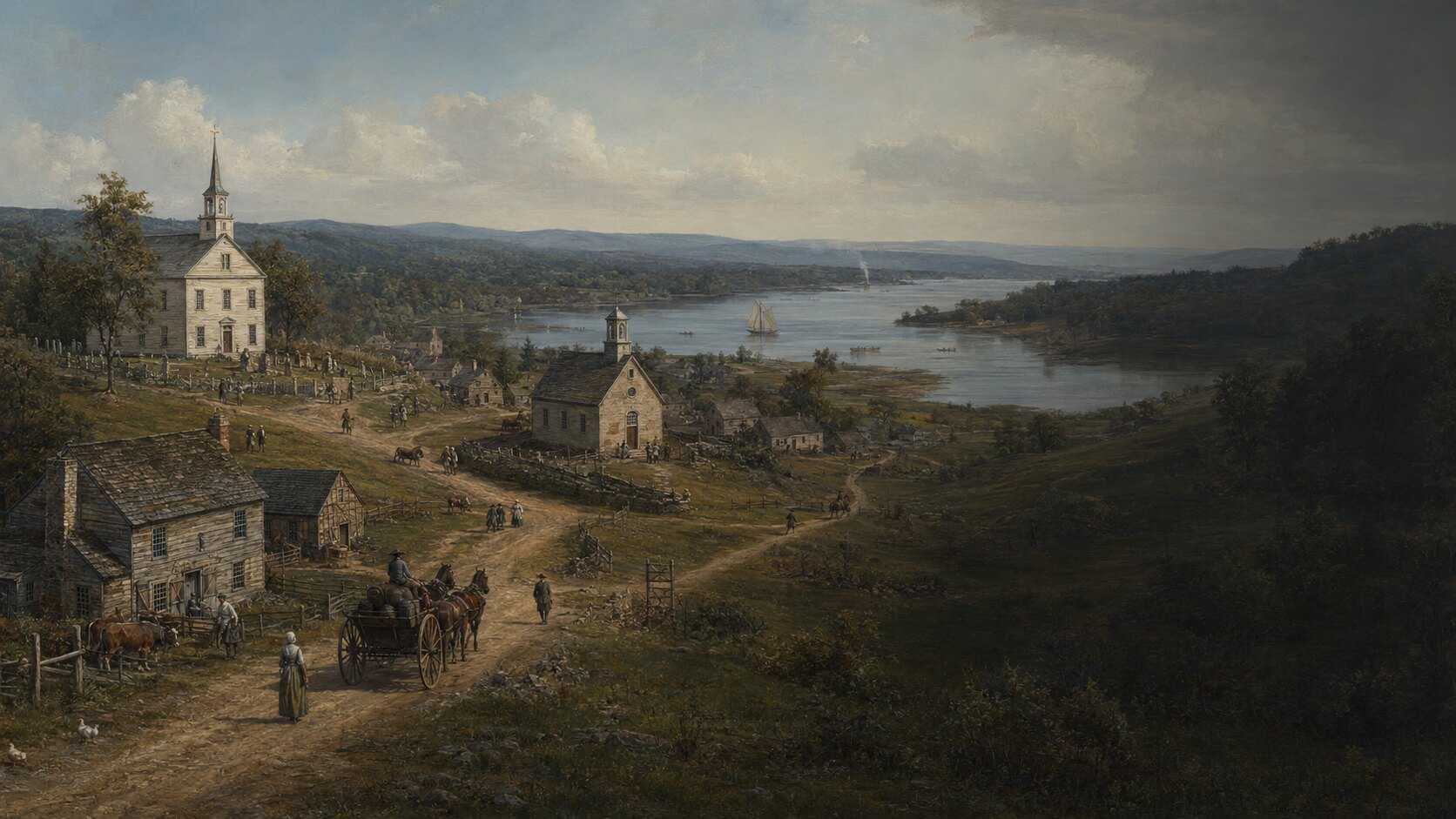
By the time the American colonies moved toward revolution in the eighteenth century, the question of liberty had become larger than taxes, trade, or representation. Beneath all of that was a deeper question, one Europe had struggled with for centuries and rarely answered well.
Can a people truly be free if their conscience belongs to the state?
When the founders of the new republic eventually answered that question, they did so with a boldness that would have been almost unimaginable in the world Father Andrew White had known. In 1791, the First Amendment declared that Congress would make no law respecting an establishment of religion, or prohibiting the free exercise thereof.
With those words, something that had once flickered uncertainly along the shores of the Potomac began to blaze.
Not fully secure. Not permanently beyond threat. But protected in law in a way it never had been before.
For every faith.
For every conscience.
For every citizen of the new republic.
And within that new framework, the Catholic Church, once hunted in England, briefly sheltered in Maryland, then wounded again by history, began to grow with a freedom earlier generations could scarcely have imagined.
Congress shall make no law respecting an establishment of religion, or prohibiting the free exercise thereof.
Bill of Rights · National Archives
That growth did not happen all at once. It came slowly, and often through hardship. But it came.
In 1789, the young republic named its first Catholic bishop: John Carroll of Maryland, heir in some sense to the same Catholic world that'd struggled to survive in the colony’s earliest days. From there, the Church spread steadily outward. Parishes rose in cities, villages, and along rough frontier roads. Missionaries followed settlers westward over the mountains and into the interior. Immigrants arrived in great waves, bearing with them the same faith their ancestors once had been forced to hide.
And in churches across the young republic, the ancient prayers of the Mass were prayed freely.
Words once whispered in secrecy.
Words once threatened by kings, parliaments, and partisan fear.
Now rising openly beneath the wide sky of a new nation.
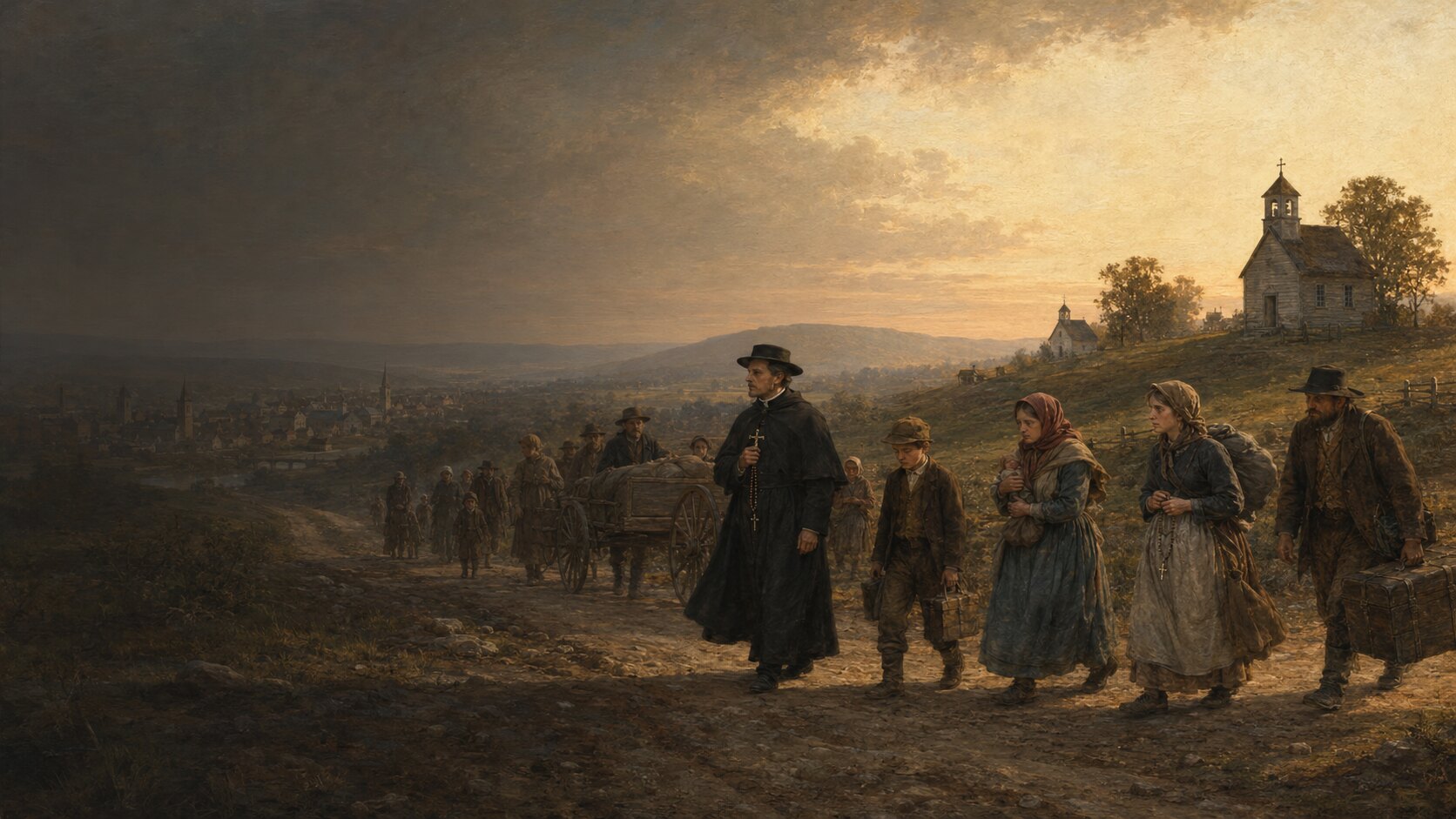
That does not mean America became the Kingdom of God. It didn’t. It doesn’t now. The country’s history is too complicated, too compromised, too full of contradiction to allow for that kind of sentimentality.
But something real had changed.
A society had emerged in which faith could breathe without first asking permission from the state.
And when I follow that freedom backward, not as myth, but as history lived by actual men and women, I wander back, again and again, to the same small island in the Potomac. Now rising openly beneath the wide sky of a new nation.
Not because everything began there.
But because something did.
Something quiet.
Something fragile.
Something that did not survive intact and yet somehow still survived.
A seed is not the tree.
But without the seed, there is no tree.
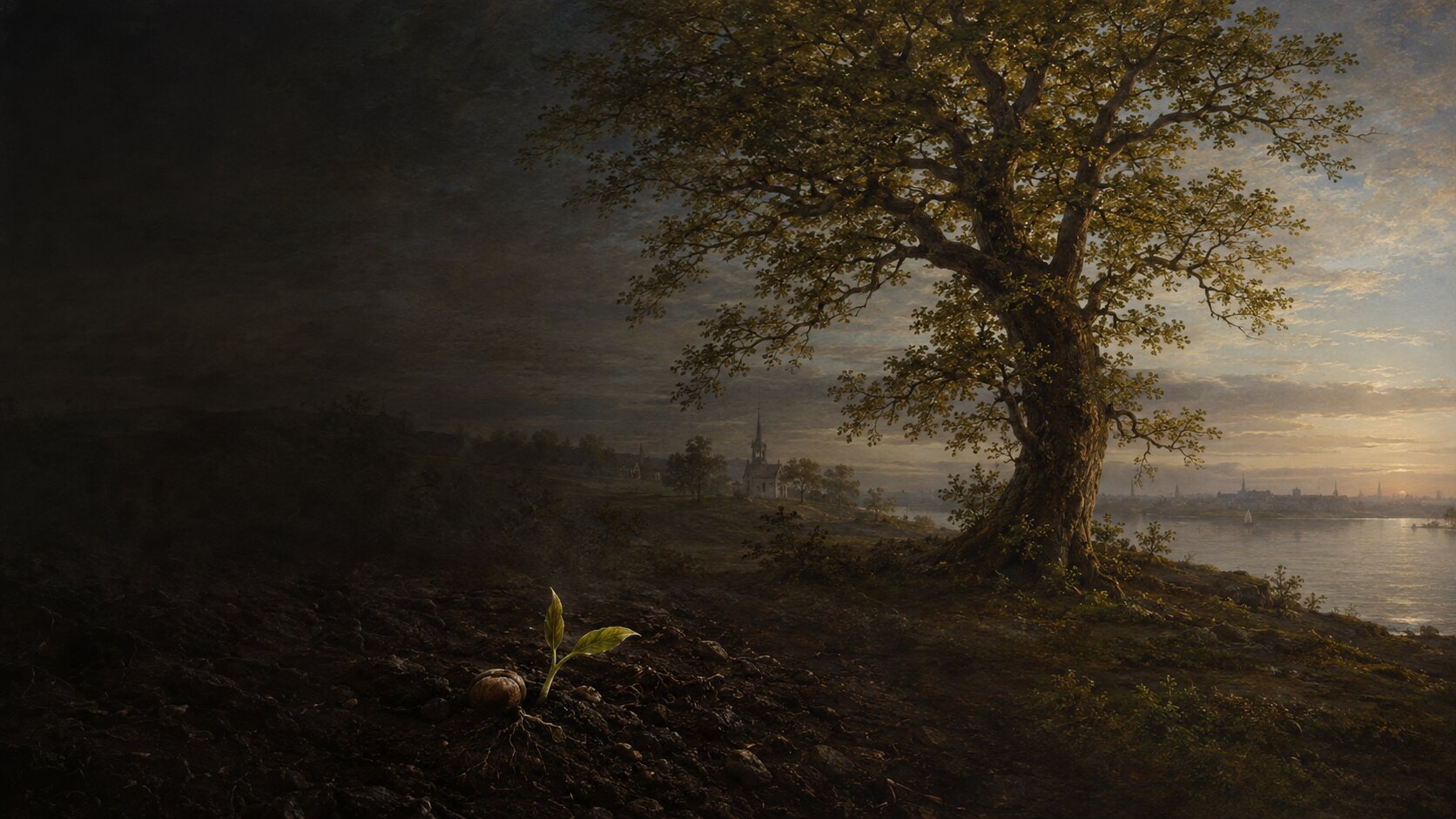
That, I think, is the right way to understand St. Clement’s Island and the Maryland experiment that followed it. Not as a fully formed achievement. Not as a clean line from colony to Constitution. History is rarely that tidy.
But as an early stirring.
A first inhalation.
A place where the old world’s grip loosened, if only for a moment, and the air changed.
Long before the nation drew its first breath, that change had already begun.
And once I started to see it that way, the story stopped feeling merely historical to me.
It began to feel present.
Because the freedom to believe, to worship, to speak the name of God without fear of penalty or coercion—those things are never permanently secured by one law or one generation. They have to be remembered. Guarded. Lived again.
The dream that landed in Maryland did not die because it was too deeply bound up with the dignity of the human person to die completely. It was wounded, yes. Delayed. Compromised. Nearly extinguished more than once.
But it endured.
And in enduring, it helped shape the atmosphere of a country not yet born.